The global metal fabrication industry is at a turning point. As designs become more complex and lead times shorter, traditional methods like band sawing, drilling, and milling are struggling to keep up.
The Tube Laser Cutting Machine has emerged as a game-changer. It is not just a replacement for a saw; it is a complete fabrication center. In this article, we analyze the technical superiority of tube laser technology and explore the market trends that are making it an essential investment for 2026 and beyond.
Technical Advantages: Why Make the Switch?
The shift towards laser tube cutting is driven by tangible operational benefits. Here is why manufacturers are upgrading:
1. Unmatched Precision and Speed
Traditional mechanical cutting often leaves burrs and sharp edges that require secondary grinding.
The Laser Advantage: A fiber tube laser delivers a clean, sealed edge with tolerances often within ±0.05mm. It can cut, drill holes, and etch part numbers in a single continuous pass, reducing processing time by up to 70%.
2. Minimized Material Waste (Smart Nesting)
Raw material costs are rising.
3. Flexibility for Complex Geometries
Architects and automotive engineers are designing increasingly complex tubular structures.
The Laser Advantage: Whether it is a round pipe, square tube, oval profile, or even angle iron, the laser head can execute complex cuts—such as bevels for welding or interlocking joints—that are impossible with traditional tools without expensive custom dies.
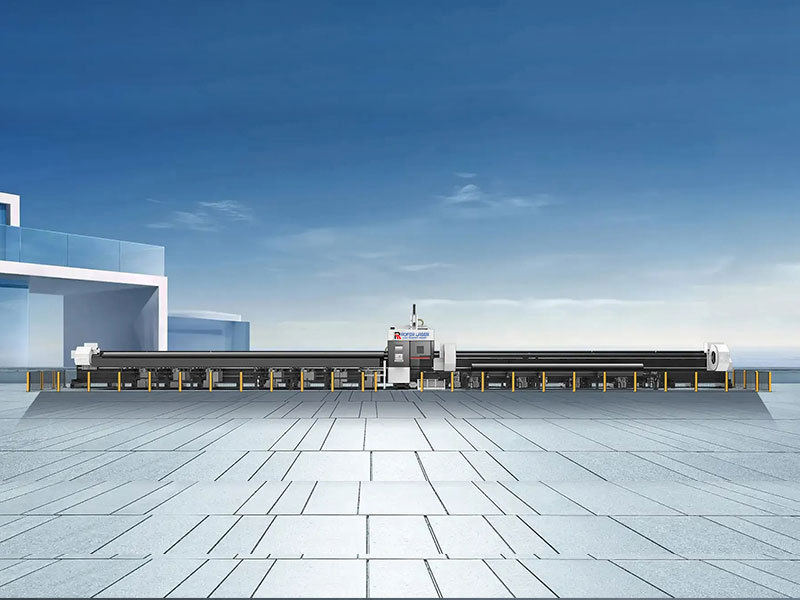
Market Growth Drivers
According to recent industrial reports, the tube laser cutting market is experiencing robust growth. What is fueling this demand?
1. The Push for Automation
With skilled labor becoming harder to find, manufacturers need machines that do more with less human intervention. Automated bundle loaders and unloaders allow tube lasers to run "lights-out" shifts, drastically increasing output per employee.
2. High-Precision Requirements in Emerging Sectors
Electric Vehicles (EVs): Lightweight, high-strength chassis components require the precision that only lasers can provide.
Green Energy: Solar panel racking systems require millions of tubes with ROFER LASER holes for assembly, a perfect application for high-speed laser tube cutters.
Industry Trends & Future Outlook
Where is the technology heading?
1. Integration of AI and IoT
The future is "Smart Manufacturing." Modern tube lasers are increasingly integrated with IoT sensors that monitor cutting performance in real-time, predicting lens maintenance needs and automatically adjusting parameters to maintain cut quality.
2. 3D Bevel Cutting
Standard tube cutting is vertical (90 degrees). The trend is moving towards 3D Bevel Heads (±45 degrees), which prepare the tube edge for welding immediately after cutting. This eliminates the need for a separate beveling process, streamlining the workflow for heavy structural steel.
3. Expansion into New Markets
While automotive remains king, we are seeing a surge in demand from the fitness equipment and modern furniture sectors, where aesthetic perfection (no visible weld seams or burrs) is paramount.
Conclusion
The Tube Laser Cutting Machine represents the convergence of speed, precision, and intelligence. For fabricators, the question is no longer if they should invest in laser technology, but when.
By adopting this technology, businesses can reduce waste, lower labor costs, and open doors to new, high-precision contracts.
Upgrade Your Fabrication CapabilitiesAt ROFER LASER, we offer cutting-edge solutions tailored to your production needs. Explore our high-performance Tube Metal Laser Cutting Machine series to see how we can help you stay ahead of the competition.
Join the Conversation
We want to hear from you:Are you currently outsourcing your tube cutting, or are you doing it in-house with traditional saws? What is the biggest bottleneck in your current tube processing workflow?
Leave a comment below, and let's discuss how modern technology can solve these challenges!


